GM: Wiley Brouillette
Players: Paiam, Justin, Levi, and Sean Nittner
System: Neuro Shell
I finally went to GDC. Huzzah! It’s been in my backyard forever, but the price of admission and the focus on video games has always kept me away. This year Banana Chan resolved both of those issues by inviting me to run AGON in the Play with Designers session. That got a badge and meant I knew we’d play some RPGs.
What I didn’t know is that Gamescape was hosting playtests of various games. When I was scouting out my room for AGON, I noticed their exhibit and folks waving “Players Wanted” flags. Intrigued I stopped in and offered the playtest games. The first one I tried was called White Elephant, a quick and light party game about claiming and stealing presents only to find out at the end what they are all worth. I was amused to see the Bounce House get stolen over and over, each time getting a little bit worse as steal cards were added to it.
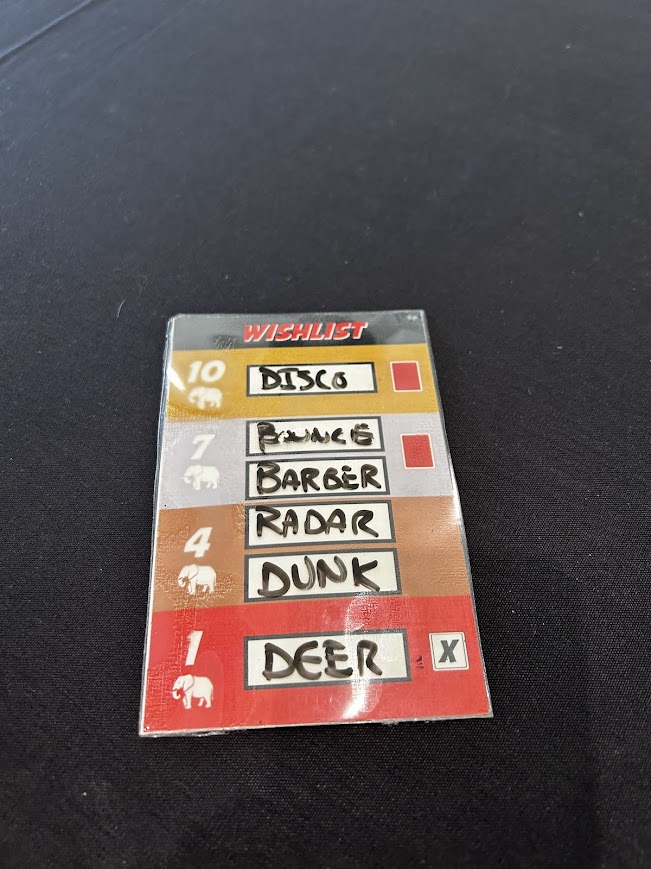
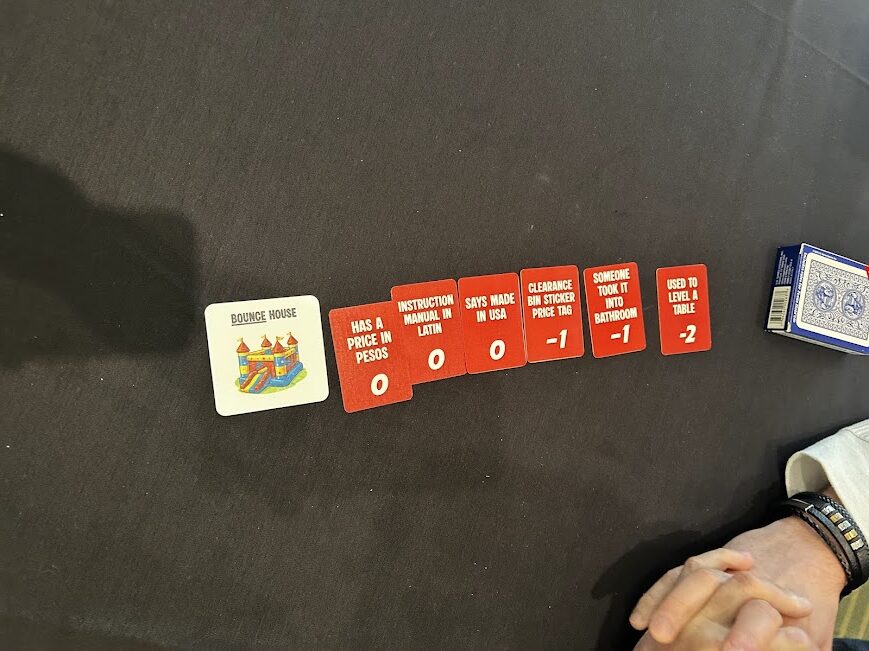
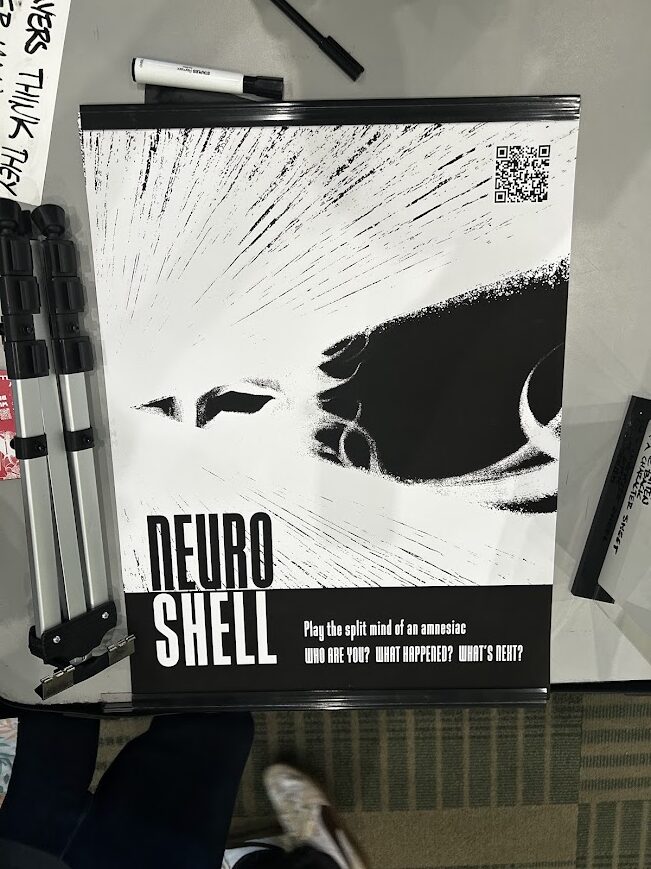
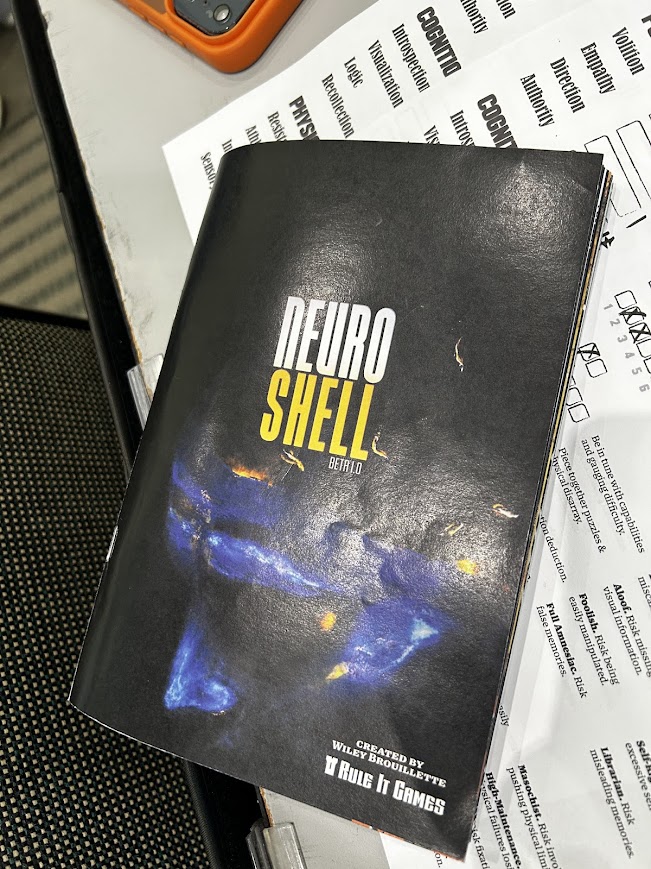
After I played a round as the host, I was about to play another game to experience the stealing when I overheard a hawker asking someone else if they wanted to playtest and RPG. My spider senses tingled. Thankfully, the person didn’t want to play and RPG, but they did want to play White Elephant with their friends who were already at the table. I did a quick trade, and sat down to play Neuro Shell, a Disco Elysium inspired RPG where folks play amnesiacs.
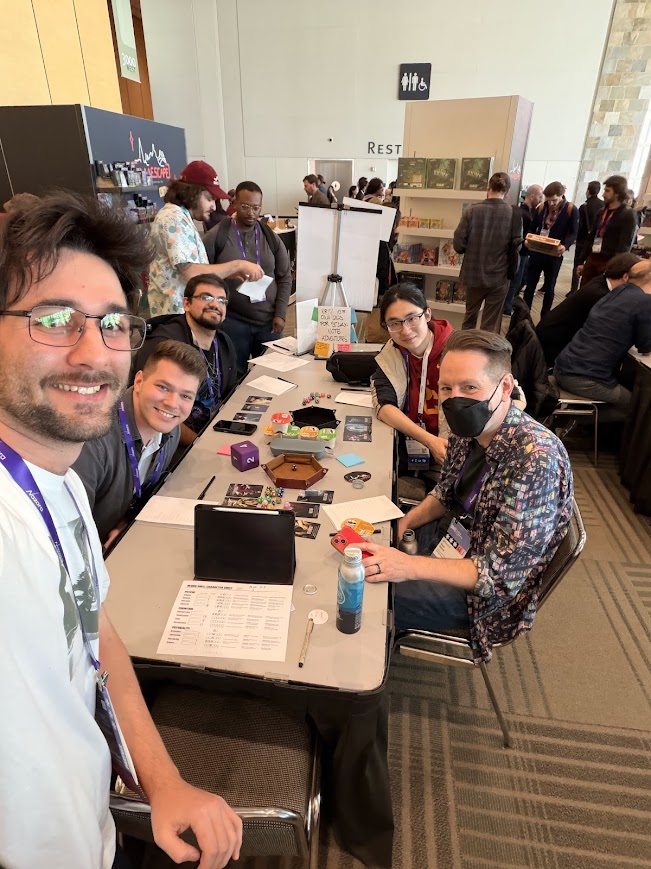
Here’s what it looked like:
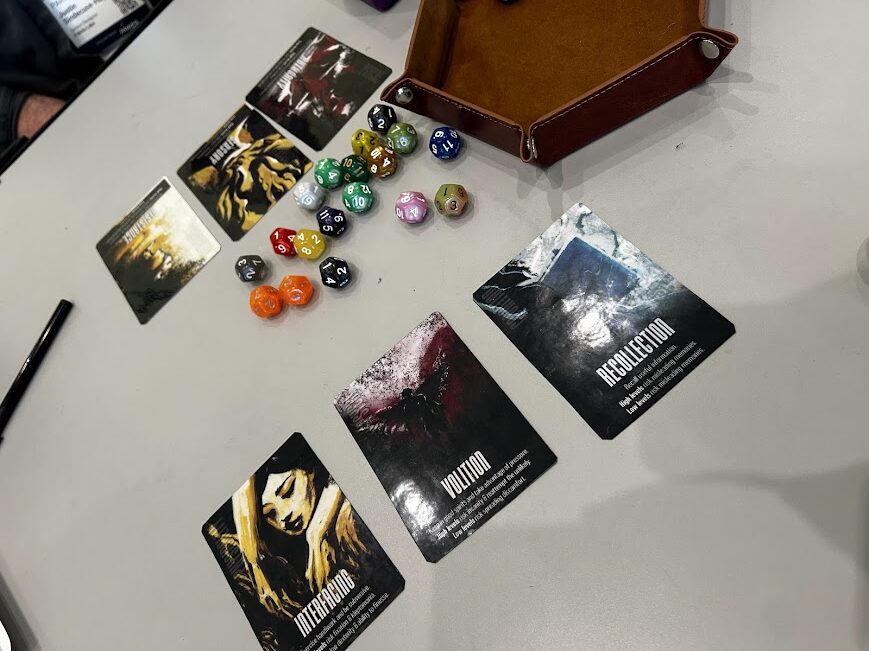
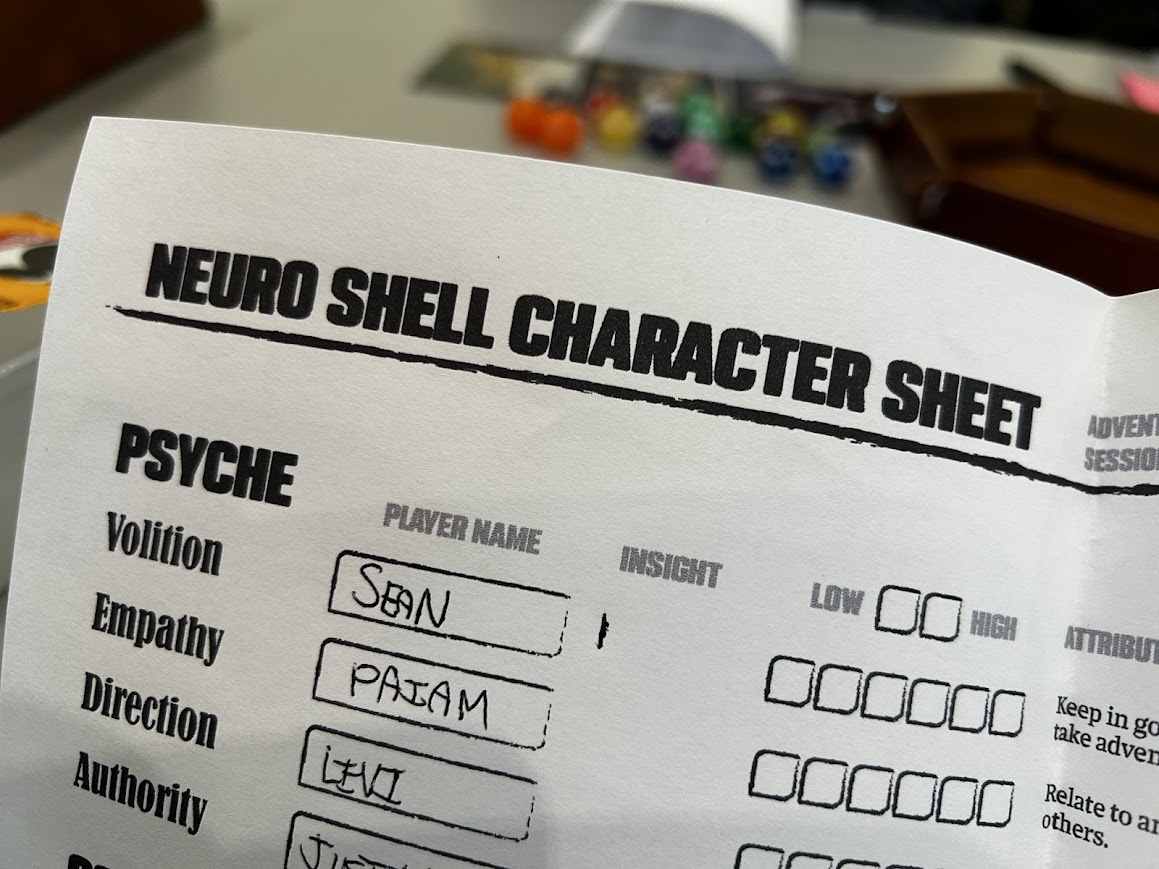
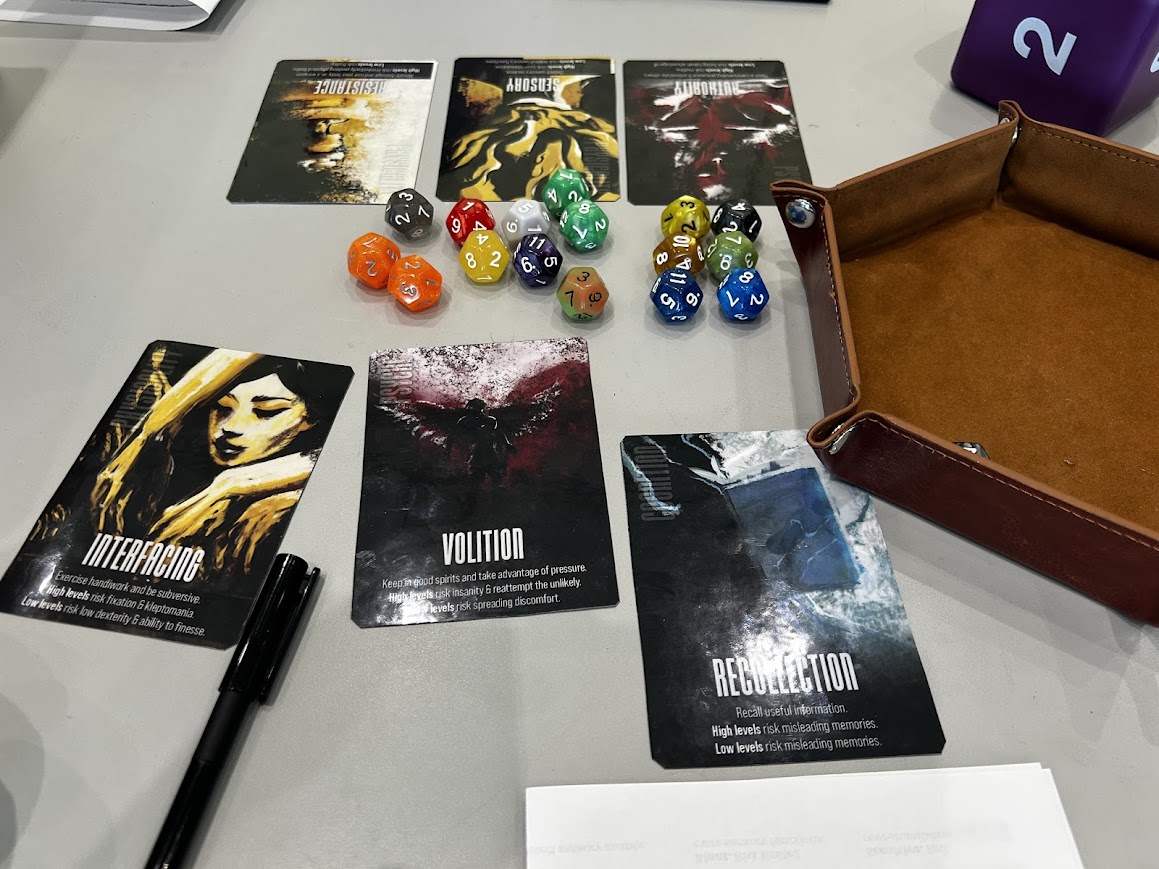
We sat down and Wiley the GM (and game designer) dropped us right into the game. It was only a 50 minute demo so he had to move fast, but also, the nature of the game is that you’re not really supposed to know what’s going on. Of the 12 parts of our psyche each of the players had control over three of them. For me it was interfacing, volition, and recollection. We each secretly determined which ones we would advance (through insight) and the lowest trait in any category would suffer from low value complications while the highest result in a category suffered high value complications. We never got a state up to the “high” category, so it was low for us all the way.
I didn’t put any points into interfacing (which covers manual dexterity) till the very end when it occurred to me that was probably why we kept crashing into things!
The players, by consensus determined the actions of the character and slowly but surely we found our way.
The Play in the Thing
We woke lying face up in an alley looing at the night sky as the rain fell on us. Wiley didn’t describe those things however. He said we woke surrounded by two walls, we felt wet, and we saw twinkling lights above. Everything was alien and unknown until we started putting the pieces together.
The first thing we noticed was the brick wall beside us with a giant hole in it, and then the rubble all around us. Had we been thrown though the wall, and if so, how were we still alive?
We wanted to inspect the window and find out what happened and then our intrusive thoughts (a mechanic Wiley introduced as Paiam asked “can we fly?”) too over and we were there. Were we superman? Not quite. The S looked right in the mirror, but that should have been a clue on it’s own.
Eventually we found Louis unconscious in the Dailey Planet, though everyone shied away from us when we approached her and given all the walls we had broken (again, low interfacing stat) on the way here and that we kept slurring our words, it seemed better to let the EMTs take care of her. We did, however spot the burning building and inside it Lex pointing a green staff at… Suuupermaan?
We charged at Luthor, heedless of the kryptonite wand and plunged him into space. Good job Bizarro.
Thoughts on the game
Compressing a game session into 50 minutes is tough and I think Wiley did an admirable job eliding a lot of the rules to keep things moving along faster and to keep us in the dark about what was really going on. I think there is some friction with the current character sheet design that requires passing it back and forth to the GM. I think that could probably be resolved by using cards or tokens. For instance, giving each player a few cards for each element they govern, and then having them pass them to the GM as they apply insight.
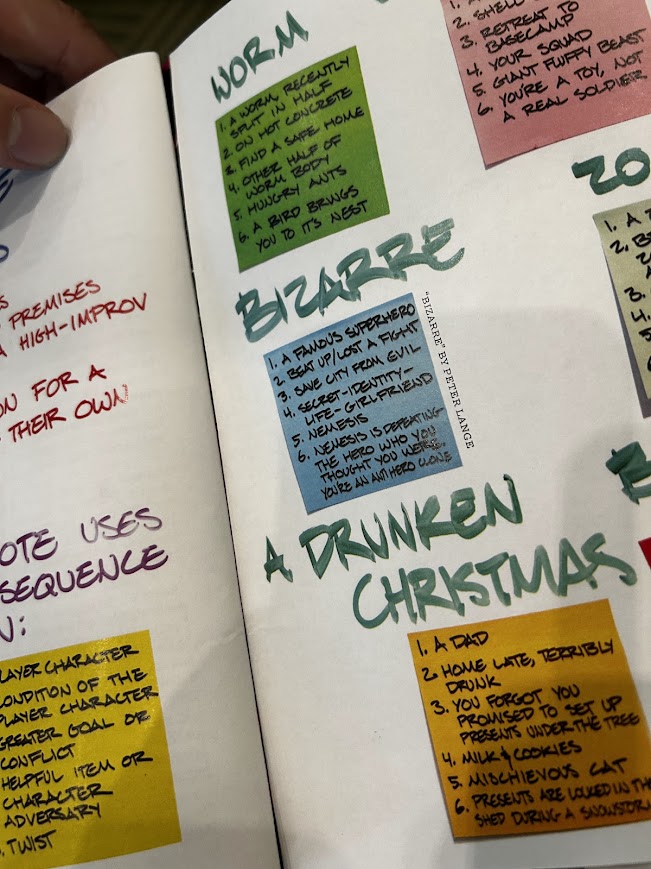
I very much dig that an entire adventure fits on a post it note. That is some clever design for the GM who needs to run something in a pinch or who doesn’t want to do a lot of prep!
The part of my brain that is happy to go along on a story was fine to just hear that we accidentally broke through another wall, but the mechanics side of me wanted to know what was going on and it was only in the end that I started piecing together what might be happening behind the screen. I think for some players though, being told that you take an action you didn’t intend (intrusive thoughts mechanic) or that you did something in a destructive way because you didn’t specify that you were being careful might feel arbitrary or punitive, and I think it’s important to frame those complications as unintended side effects rather than ascribing callousness to the character we’re all trying to figure out who they are.
Some other games with similar themes have mechanics that might be worth reviewing or wholesale poaching:
- Bluebeard’s Bride had a collective character controlled by all the players and control shifts when the ring is passed. In Neuro Shell because attributes are rolled so frequently, the “control” of the character could pass every an attribute is rolled. So if Interfacing is rolled and I’m in charge of that attribute, I’d be in charge of the character until another attribute that someone else governs needs to be rolled and then control would pass to them. I think that would address a little bit of the alpha play syndrome (I noticed that Justin and I were taking the lead often and I was looking for ways to pass it back to Paiam and Levi) as well as people talking over each other or saying conflicting things.
- A Penny for My Thoughts is out of print, but I thought it had a very cool approach to recovering from amnesia, where the players offer up possibly histories to each other and choose between them. In this case I think the story is fixed (we were playing Bizzarro who thought he was Superman) but there were instances where we asked questions like “what do we remember” or “how do we feel about someone or something” and it felt like any kind of internal inquiry where we just ask the GM what’s actually going on was antithetical to the game itself. In a game where you don’t know what happened, I think the piecing together should come from external stimuli rather than just trying to remember. So in those cases a bit of turning the question back on the players via the Penny methods might give the GM an answer without having them reveal your interiority.